CONSONANCE And DISSONANCE: What Does It Even Mean?
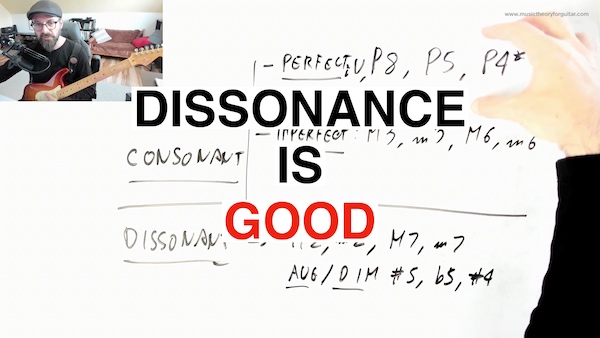
Do you know what makes some intervals consonant and others dissonant? And for that matter, do you really know what ‘consonance and dissonance’ means?
It’s actually a pretty frequently misunderstood concept. Most people go by the definition of:
Consonance = pleasant sounding, and
Dissonance = unpleasant sounding.
... but this isn’t really completely accurate. Or you know, it's not accurate at all...
...mmmh, let's just settle for "it's completely wrong", ok?
In isolation, many consonant intervals will in fact sound pleasant, and many dissonant intervals will sound unpleasant, but the issue is that these intervals are not generally used in isolation.
(Unless you listen to music where just two notes - and no more than two - sound at the same time, and there is no harmonic context. If you do, let me know as I too like to ~be bored out of my mind~ expand my musical horizons)
The point is that there is always context, and different contexts can change everything.
Just putting different notes underneath a particularly dissonant interval can instantly make it sound beautiful and not even remotely ‘unpleasant’ (examples below...).
So if we were to just simply think of some intervals as inherently unpleasant, we might end up under-utilizing those intervals because we of course want to make pleasant music, not unpleasant music.
But the way of making great sounding music is combining both consonant and dissonant sounds in the right way! Dissonance is spice.
If we use nothing but consonance, music will sound boring and uninspired. If we use nothing but dissonant intervals, music will sound ungrounded, hard to follow, and harsh.
It’s the right combination that actually makes for pleasant sounding music that people will enjoy listening to.
So, what you could do (and I recommend it) is:
memorize exactly what intervals are dissonant,
which ones are consonant,
and how to effectively combine them to make great sounding music.
If you want to learn about this and much more about this subject, watch the video linked below and I’ll show you what you need to know! (With plenty immediately-usable examples)
Want to know even more about harmony, chords, dissonance, consonance, and more? Check out my Complete Chord Mastery guitar course to complete your understanding of chords and harmony on the guitar!
Video Transcription
Hello Internet, so nice to see you! What intervals are consonant and what intervals are dissonant? Well, for that matter, what even consonant and dissonant mean? Well, first of all, what's an interval?
An interval is two notes played together, it could be something like that, it could be something like that, it could be something like that, as an interval, it could be something like anything. As long as you pick two notes, some of them sound dray, some of them sound a bit meh, as long as you pick two notes, that's an interval.
And the distance between those two notes tells you what interval it is. And we call those intervals according to their distance, seconds, thirds, fourths, fifths, etc. According to the distance along a scale.
Well, some of those dissonant, these intervals, I'm sorry, some of those intervals are consonant, some of those intervals are dissonant. With consonant, it means that generally people like the sound we get out of them, and then the sound is generally pleasant.