The Big Picture - Universal Rhythm Skills Explained
Have you ever wondered if rhythm techniques change depending on the style of music you play? Whether you're into metal, country, funk, or classic rock, here's something most guitarists overlook: the rhythmic foundations are exactly the same across every genre. That's right---no matter what style you're jamming in, the core rhythmic tools stay consistent.
In this video, you'll discover how essential rhythm techniques---like syncopation, subdivisions, rests, and more---aren't just for one style. They're universal. You'll see how the same elements that shape a country groove or a classic rock riff also drive the intensity behind hard rock and metal. Once you understand this, you'll realize rhythm is your most powerful tool---no matter what kind of music you love to play.
Transcript
Hey there, fellow guitar enthusiasts. I'm Brian Fish from MusicTheoryForGuitar.com. The idea for this video comes straight from one of you. A viewer dropped a comment on my video "Six Rhythms Every Guitar Player Needs to Know," and it sparked the idea for this video. Here's what they said:
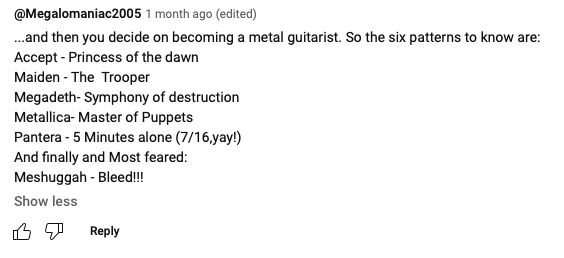
And you know what they're spot on. The examples I played featured classic rock, country, and folk vibes. There was absolutely no metal or hard rock in sight in that video. But here's the exciting twist. Those rhythmic elements I used, they're not just random things. They're the foundation for every style of guitar playing, even for metal guitar players. That's right, those same rhythmic elements can power anything from a country twang to the heaviest of metal and hard rock riffs.
So in this video, I'm taking those exact same techniques and showing you how to apply them to hard rock guitar parts. You will see how universally skills are to like a secret weapon every guitarist can yield no matter what style they play.
Element 1
The first rhythmic element we're going to cover, which is common in all styles of music, is the ability to play chords mixed with root notes. It doesn't matter if you're playing country, rock, or, in this case, hard rock; you need to master this skill. This example is in the style of Accept or Def Leppard. There are a lot of roots with chords that move around to create a hook.

Example 2
The next rhythmic element common across all styles of music is syncopation. Syncopation occurs when you stress beats that are not typically emphasized. For this rhythm, we will achieve this by adding ties. When you see a tie, it connects two notes of the same pitch, indicating that they should be played as a single note. You play the first note. The second note is not played but helps the first note ring longer.

Element 3
The next rhythmic element we will highlight is subdivisions. You need to know how to play each rhythmic pattern in isolation and in combination with other patterns. The first two examples used an eighth note pulse. For this one, we will use a sixteenth-note pulse. When you use a sixteenth-note pulse, that does not mean that you only play straight sixteenths the entire time. The sixteenth notes will usually be mixed with other note values. This rhythm is a mix of sixteenth and eighth notes.

Element 4
This example will highlight another element that everyone needs to master: rests. When you see a rest, it indicates absolute silence. You must ensure that your strings stop ringing and that no extra noise is coming from your instrument at all.

Element 5
This example is going to include a little bit of everything, but the new rhythmic element that we're going to be highlighting is muted notes. Muted notes are the cool percussive sound you get by light touching your strings, not pushing them down enough to make a note, that you hear in all styles of music.

Element 5
Rhythmic patterns that build on groups of 2s and 3s are common in all styles of music. If you enjoy more advanced hard rock by bands like Tool or Meshuggah, much of what they do revolves around complex rhythmic patterns. For this example, we will present a simple version of what they do just to get you started. One of the easiest deceptive rhythm patterns is playing patterns of three across three measures. Here is the pattern. 
The rhythmic pattern repeats every beat and a half. This is a relatively short pattern for this style of music. You could incorporate some patterns of two to extend it further. Bands like this often include patterns of five and seven as well, which are simply combinations of twos and threes.

Conclusion
The rhythmic elements we covered are used in all styles of music and are things that every guitar player needs to know how to play. If you really struggle with rhythm or are just looking to enhance your rhythm skills, I've got something special for you. It's my free video guide: Six Easy Steps to Learn and Play Any Rhythm with Perfect Timing. In it, I guide you through each step of the process, showing you exactly how to practice rhythm in layers like a pro, so you develop rock-solid skills and make rapid progress.
Just click the link below this video to grab your free guide right now.
Six Easy Steps to Learn and Play Any Rhythm with Perfect Timing